Action Plan for the Future

My Beliefs

The first blog that was written on this sports page summarized what I currently am involved in with coaching, and my coaching experiences from the past.

This post looks at what I want to do with coaching in the future.

I don’t believe in setting out tasks and sticking to them no matter what. It is important to set targets to achieve as a form of goal setting for something to work towards. However instead, I believe in adapting to your environment and getting the best out of yourself.

A current example is the pandemic. People, including myself had goals set out to achieve. This summer (2020) I planned on going to Atlanta to expereicne coaching in the United States. However this is unfortunatley not going ahead. It is now important for me to adapt to change, set out another goal for me to acheive in these challenging times.

It is paramount as a coach to be flexible. Have goals set that you want to achieve but don’t just be fixed minded towards reaching your goals (Dweck, 2009).

I am going into my third year at the University of Central Lancashire hoping to graduate next summer (2021). One thing I have learnt from my time at University is not to focus on one task and cut out everything else in your world to achieve that goal. It will be fantastic to come out of University with a 1st class degree, but if that’s for a couple of minutes of a sense of proud, then I know it won’t have been worth it. Instead coming out of the graduation with a big network range within sport, qualifications for relevant sports and graduating as a more ‘professional’ coach with 100’s of hours of experience under my belt is a better approach, in my opinion.

Atlanta 2020: Best of Atlanta, GA Tourism - Tripadvisor
Atlanta. This summer (2020) my plans have changed to coach here. But I’m hopeful another time I’ll be able to coach in this state.

My Experiences this Year

This past year, I have made great network links with Little Kickers South and East Lancashire and also with Euxton Villa football club. I hope to use this to find a sensible career pathway for myself, and then also build on this and add to my network, expanding my reach within the network. Coming into second year I didn’t plan on these opportunities arising for me. A few years ago I might have avoided the challenges of being a lead coach for both of these opportunities. But this year I decided to go with it and not only has this helped me with this module as I have been able to write on personal experiences, but it’s also helped me develop as a person.

I have faced lots of challenges through coaching , where I have had to adjust and be flexible. This ranges from torrential rain outside and having to think on the spot what to do, to having the challenge of only having one child turn up to training, and entertaining them for the duration of the session. Tackling these coaching challenges and being able to overcome them I believe I can take this attitude to any task in life.

My Goals

My goals for the future, without a date are the following;

  • To gain a Level 2 in FA coaching (F.A, 2020).
  • To gain a Level 2 in Multi – Skills coaching (1st4sportqualifications, 2020).
  • To travel abroad and coach in sports.
  • To stay in touch with the sports industry, preferably coaching.
  • Enjoy what I do, make sure I don’t do it for other reasons.
  • To gain other potential sporting qualifications that support where I currently am at in my career.

Gaining a level 2 in FA coaching, will not only develop myself as a coach further, but it will also open many doors for a coaching career in the future. Similar with the Multi Kills coaching qualification, lots of jobs look for applicants with this qualification.

For my final year at UCLAN, the modules I am undertaking are the:

  • Critically reflective coach
  • Performance Environment
  • Coaching Practice
  • Dissertation

My decision to undertake a dissertation was one to think about. As I don’t see myself as a great writer, this was one of my doubts . But the idea of coming out of university with something I have wrote myself excites me. I have proven to myself I can write on these blog posts to a good standard, so I’m hopeful this can only get better for next year.

This Module

This module has exposed me to reflect on my coaching, and think about why I do what I do when coaching. When I have been coaching during my second year I have been able to think about applying some of the themes that have been covered in the workshop. One being the behaviorism vs constructivism coaching styles and which is appropriate to use. I have been coaching with 18 months to 5 year old’s at Little Kickers, and under 7’s at Euxton Villa. Having learnt the knowledge from the module it’s useful to experiment different approaches to get the most out of my players.

I will be continuing updating this blog in the summer, when we are allowed to coach again. I will hopefully in the future be able to blog about qualifications earned, further experiences gained, and hopefully good stories from third year.

Coming out of University I want my career to be in the sporting industry, looking at some form of coaching. But the most important action plan, is I must remain happy with what I do.

References

1st4sportqualifications. (2020). Multi Skills Development. Retrieved from https://www.sportstructures.com/education-training/book-onto-a-course/multi-skills-courses/1st4sport-level-2-certificate-in-coaching-multi-skills-development-in-sport/

Dweck, C. (2009). Mindsets: Developing Talent Through A Growth Mindset. Olympic Coach, 4-7.

F.A. (2020). The Boot Room. Retrieved from The F.A: http://www.thefa.com/learning/courses/fa-level-2-in-coaching-football

Reference List

Abraham, A., & Collins, D. (1998). Examining and extending research in coach developemnt. Quest, 50.

Apitzsch, E. (2009). A case study of a collapsing handball team. In S. Jern & J. Näslund (Eds.), Dynamics within and outside the lab (pp. 35–52). 

Aubrey Kent & Samuel Todd (2004) Selecting Team Captains, Strategies, 17:4, 21-22,

Boyatzis, R. E., Smith, M. L. and Beveridge, ‘Alim J. (2013) ‘Coaching With Compassion: Inspiring Health, Well-Being, and Development in Organizations’, The Journal of Applied Behavioral Science, 49(2), pp. 153–178

Branhart, A. (2000). Performance during performance: Using Goffman to understand the behaviours of elite youth football coaches during games.

Bull, S., Shambrook , C., James, W., & Brooks, J. (2007). Towards an Understanding of Mental Toughness in Elite English Cricketers. JOURNAL OF APPLIED SPORT PSYCHOLOGY, 210.

Callero, P. (1994). From Role-Playing to Role-Using: Understanding Role as Resource. Social Psychology Quarterly Vol. 57, No. 3.

Charbonn, D., Barling, J., & Kelloway, K. (2001). Transformational Leadership and Sports Performance:The Mediating Role of Intrinsic Motivation. Applied Social Psychology, 1523.

Cotterill, S., 2012. Team psychology in sports: Theory and practice. Routledge.

Crane, J. and Temple, V. (2015) ‘A systematic review of dropout from organized sport among children and youth’, European Physical Education Review, 21(1), pp. 114–131

Cullingford, C. (1991). The inner world of the school: Children’s ideas about schools. Cassell Educational Limited.

Csikszentmihalyi, M (1990). Flow: The psychology of optimal experience. New York: Harper and Row Publishers.

Deci, E. (1971). Effects of externally mediated rewards on intrinsic motivation. Journal of Personality and Social Psychology, 18(1), 105-115.

Ericsson, A. (1993). The Role of Deliberate Practice in the Acquisition of Expert Performance. Psychological Review Vol. 100. No. 3, 394.

Evans, J. (2010). Elite level rugby coaches interpretation and use of Games Sense. Asian J Exerc Sports Sci, 17.

Fransen, K., Vanbeselaere, N., Exadaktylos, V., Vande Broek, G., De Cuyper, B., Berckmans, D., Ceux, T., De Backer, M. and Boen, F., 2012. “Yes, we can!”: Perceptions of collective efficacy sources in volleyball. Journal of Sports Sciences30(7), pp.641-649.

Gee JP, 2013. Good Video Games and Learning – Second Edition. New York, NY: Peter Lang Publishing Inc. Harvey S, Cushion CJ, Massa-Gonzalez AN, 2010. Learning a new method: Teaching games for understanding in the coaches eyes. Physical Education and Sport Pedagogy. 15: 361-382.

Gilbert, W., & Trudel, P. (1999). Role of the coach: How model youth team sport coaches frame their roles. Sport psychologist, 21.

Gilbert, W., & Trudel, P. (2001). Learning to coach through expereicne: Reflection in model youth sport coaches. Journal of Teaching in Physical Education.

Goffman, E. (1970). Strategic Interaction. Pennsylvania.

Gucciardi, D., & Gordon, S. (2011). Mental Toughness in Sport: Developments in Theory and Research. Routledge.

Hall, C. (2009). Imagery and observational learning use and their relationship to sport confidence. Journal of sports sciences.

Haskins, D. (2010). Coaching the Whole Child: Positive Development Through Sport. Leeds: Coachwise.

Heil, S. (2018). What are Preferred Leadership Styles of Athletes. Kinesiology, sport studies, and physical education, 3.

Hodges, Nicola, and Mark A. Williams. Skill Acquisition in Sport : Research, Theory and Practice, Routledge, 2012. ProQuest Ebook Central, https://ebookcentral.proquest.com/lib/uclan-ebooks/detail.action?docID=981844.

Honeybourne, J., & et al. (2004). Acquiring Skill in Sport: An Introduction. Routlegde.

IOC (2005) Most Popular Olympics sport. Topend Sports Network: Olympic Programme Commission, Report to the 177th IOC Session, 24 May 2005 (online). Available at: http://www.topendsports.com/world/lists/popular-sport/ioc-website.htm (Accessed 10th October,2011).

Irwin, G., & et al. (2004). Reflective practice and the origins of elite coaching knowledge. Reflective practice, 430.

Jolanta, J. (2006) Coaching for creativity, imagination and innovation. 

Karen Wesson, & Boniwell, , I. (2007). Flow theory-it’s application to coaching psychology. International Coaching Psychology Review, 33-43.

Lee, T. D., Swinnen, S. P., & Serrien, D. J. (1994). Cognitive effort and motor learning. Quest, 46, 328-344

Lewis, L. (2010). How Madoff Did It: Victims’ Accounts. Springer.

Loughead, T. M., Hardy, J., & Eys, M. A. (2006). The nature of athlete leadership. Journal of Sport Behavior, 29, 142-158.

MacPhail,  A.,  Gorely,  T.,  &  Kirk,  D.  (2003)..Young  people’s  socialisation  into  sport:  a  case  study  of  an athletics  club..Sport,  Education  and  Society,  8(2),  251-267.

Magill, R. A., & Hall, K. G. (1990). A review of the contextual interference effect in motor skill acquisition. Human Movement Science, 9, 241-289.

Mann N, Krane V (2018). Inclusion and Normalization of Queer Identities in Women’s College Sport. Carolina : Women in Sport and Physical Activity Journal. 76-88.

Marivoet S (2014). Challenge of Sport Towards Social Inclusion and Awareness-Raising Against Any Discrimination. Portugal : Physical Culture And Sport. Studies And Research. 3

Maxwell, J.  P., Masters, R.  S.  W., & Eves, F.  F. (2000). From novice to knowhow: A longitudinal study of implicit motor learning. Journal of Sport Sciences, 18 , 111–120.

Meggyesy, D. (2016, February 22). sportsenergygroup. Retrieved from 90% Mental, 10% Physical: The Inner Game: http://sportsenergygroup.com/90-mental-10-physical-the-inner-game-by-david-meggyesy/

Mintz, L. (2019). Can an elite holiday club costing £1,500 a week give pupils an edge in their entrance exams. Telegraph.

Mosston, M., & Ashworth, S. (2002). Teaching physical education.

Mounoud, P. (1996). A recursive transformation of central cognitive mechanisms: The shift from partial to whole representations. In Sameroff, A.  J., & Haith, M.  M. (Eds.), The five to seven year shift: the age of reason and responsibility  (pp.  85–1 10). Chicago, IL: University of Chicago Press.

Nash, C., Martindale, R., Collins, D., & Martindale, A. (2012). Parameterising expertise in coaching: Past, present and future. Journal of Sports Sciences.

Nicholls,  J.  G.  (1989).  The  competitive  ethos  and  democratic  education.  Cambridge,  MA,  Harvard University  Press.

Nurrenbern, S. C. (2001) Piaget’s theory of intellectual development revisited. Journal of Chemical Education 78(8): 1107-1110. Cited in. Aguiar, B. & Light, R. (2018) Physical eduction teachers' and sport coaches' disposition toward games teaching and the influence of GBA. 7: 1-10

Ollis, S., & Sproule, J. (2007). Constructivist coaching and expertise development as action research. Int J sports sci coach, 1-14.

Orlick, T. (1986). All a winner. Oslo.

Palmer, C. (2013). The Sporting Image: Unsung Heroes of the Olympics 1896-2012 (Paperback). SSTO publications.

Pease, D. G., & Zhang, ]. ]. (2002) . Predictors of preadolescent athletic leadership behavior as related to level of play. International Sports Journal, 6( 1), 92-106.

Pill, S. (2016). Can Gee’s Good (Digital) Game Design Features Inform Game-Based Sport Coaching? Rsearch Journal Of Sport Sciences.

Sanderson, J. (2011). It’s a whole new ballgame. New York, NY: Hampton Press.

Shea, J. B., & Morgan, R. (1979). Contextual interference effects on the acquisition, retention, and transfer of a motor skill. Journal of Experimental Psychology: Human Perception and Performance, 5, 179-187.

Shea, J. B., & Titzer, R. C. (1993). The influence of reminder trials on contextual interference effects. Journal of Motor Behavior, 25, 264-274.

Sicilia, A. (2008, March 26). Revisiting the paradigm shift from the versus to the non-versus notion of Mosston’s Spectrum of teaching styles in physical education pedagogy: a critical pedagogical perspective. Retrieved from https://www.researchgate.net/figure/Characteristics-of-the-versus-and-non-versus-notion-of-teaching-styles_fig4_233421644

Spence, S. (2003). Social Skills Training with Children and Young People: Theory, Evidence and Practice. Child and adolescent mental health.

Visek, A. J., S. M. Achrati, H. Mannix, K. McDonnell, B. S. Harris, and L. Dipietro. 2015. “The Fun Integration Theory: Towards Sustaining Children and Adolescents Sport Participation.” Journal of Physical Activity and Health 12 (3): 424–433.

Villalon, C., & Martin, S. (2020). High school coaches coaching efficacy: Relationship with sport psychology exposure and gender factors. Journal of applied sport psychology, 64-80.

Willis, S. (2010) Table tennis profile: Segun Moses Toriola, Bettor.com (online). Available at: http://blogs.bettor.com/Table-Tennis-Profile-Segun-Moses-Toriola-a97369 (Accessed 10th October,2011).

Zeitz, C., & Spoehr, K. (1989). Knowledge organization and the acquisition of procedural expertise. Applied Cognitive Psychology, 313-336.

Implicit learning and contextual interference

This post will be about implicit learning, and also the link to contextual interference.

I want to start off with describing what implicit learning is. From my experience during university, implicit learning is learning the skill through day to day life skills. For example in the Karate Kid film, the child starts to learn movements by ‘putting his coat up on a hanger’. I will use this example later and expand more on this important coaching style adopted.

Karate kid jacket on jacket off
Karate Kid

From a research study, ‘noticeable changes in task strategies and motor performance have been documented after the age of 5 years for a range of different tasks, including lifting objects, visuomanual tracking, target pointing, drawing, and writing’ (Mounoud, 1996). This reinforces the importance of using day to day life to learn skills. When learning a new skill it can often be confusing or too complex to understand. Having the ability for the coach to implement implicit learning to then give clarity to the player about how to learn the skill is something I believe is essential. And from personal experience after being in a University Lesson where implicit learning was adopted I could safely say I imporved the skill – which was a serve in Volleyball.

1 Pc Kids ABS Electric Automatic Blowing Bubble Machine Outdoor ...
Bubble analogy whist playing Volleyball

The implicit technique used was to pretend you were a young child trying to burst the bubbles. As I could rememebr doing this as a child, it allowed me to correctly complete the skill. ‘ Implicit sequence motor learning is associated with greater activation of the caudate nucleus following 5 days of tracking practice among older adults’ The research undertaken reinforces the practical lesson that I attended of how the coaching approach can be used in adult practice. The coaching process ‘occurs without the concurrent accumulation of explicit/verbalizable knowledge’ (Maxwell, Masters, & Eves, 2000).

Contextual interference (CI)

A random schedule of practice results in less improvement during practice, but promotes greater retention and transfer of skill, when compared to a blocked schedule of practice (Shea & Morgan, 1979). Making coaching sessions more random might deem less significant in the short term but much more beneficial in the long term.

Much of the research surrounding the CI effect appears to predict that the planning, selection, and execution of motor skill is essential for the interference caused between tasks (Magill & Hall, 1990). The best coaches manage to plan a random practice that looks messy and unorganised but in actual fact it allows players to think cognitively. ‘Cognitive effort is the mental work involved in selecting and executing decisions and actions’ (Lee, Swinnen, & Serrien, 1994). If random practice takes place it will lead to ‘greater cognitive effort through intra- and inter-task comparisons because the skills differ from trial to trial’ (Shea & Titzer, 1993).

The Karate Kid

As I mentioned above, implicit coaching was applied to the karate kid film. The coaching allowed the child to learn through a daily task, at first the child thought it was a waste of time, but it soon allowed the performer to learn the fundamental fight moves in karate to allow him to go on and win his competition. I have already said the benefits of implicit learning above, but I wanted to see if it linked to contextual interference. Definition for the action plan reconstruction hypothesis states that for an upcoming task in random practice ‘a person must retrieve the appropriate motor program representing that action and then add the parameters specific to the constraints and goal of the task to be performed’ (Magill & Hall, 1990). I believe every performer must get the correct information passed onto them. No better way than implementing an implicit style of learning through the form of putting a coat on the hanger. The child knows exactly what to do. But what I think is just as important is the other methods of coaching he gives to the player. Linking to the 4 corner model of all aspects of learning, the coach presents discipline, he offers different types of practice to the child, 1 to 1, the use of mechanical guidance i.e tennis balls, sticks. Both which help the player to think cognitively and develop his learning. But most importantly he takes him on a trip to learn about the culture of the city, it really enables the child to think why he is doing what he is learning and understand the fundamentals of the sport.

Linking both the implicit learning and contextual interference together in my opinion is a recipe for success. It really allows the performer to think outside the box and develop his or her learning. It incorporates all the corners to the 4 corner model – mentally, tactically, physically and psychologically. Overall I think it was a super method when coaching and one which I will be using more frequently.

What makes a great leader ?

At the time I am writing this, there is currently no sport taking place in the world. In actual fact there is not a lot going on in the world at the moment because of the pandemic that is corona-virus that is making people stay at home.

That doesn’t mean however that sport is not talked about. Recently, on BBC 1, where match of the day would usually be put on TV and show highlights of the Premier League from the weekend fixtures, there was a podcast instead. This included the same people that would present match of the day usually but since there was no matches to talk about, the legends of the premier league talked about the great captains in recent times. They ranked their top 10 captains of the premier league (of all time) in their opinion, and discussed why they put players in their in specific places in the top 10.

BBC One - Match of the Day: Top 10 Podcast, Series 1, Premier ...
BBC 1 podcast presented by Gary Lineker, alongside with Ian Wright and Alan Shearer.

As I was watching it, it made me think what actually makes a great leader, in all sports and not just football. And I was starting to think how it impacts / or has already impacted coaches in the past.

Loughead, Hardy, & Eys, in 2006 said leadership is ‘an athlete, occupying a formal or informal role within a team, who influences a group of team members to achieve a common goal’. Not only just this but also Fransen et al., in 2012 said Athlete leaders influence team cohesion, athlete satisfaction and team confidence.

Just from this, it is clear to me that coaches have just an impotant decision to make when choosing a captain, for then the captain to then go and show his/her capabilities. The coaches that are intelligent to make the correct informed decison about chosing the correct captain are the teams usually that ‘win’. It doesn’t come to a coincidence that all the captains listed in the podcast, have won trophies in their carrer. Is it actually the coach that deserves the credit to pick the right captain?

A few examples of the captains in the podcast:

(Far left) Roy Keane, Manchester United -Winner of many trophies at Manchester United, his attitude was dominating, he led on the pitch as the right passion was shown.

(Second left) Vincent Kompany, Manchester City -Won many trophies at Manchester City, he was huge with the fans, he orchestrated players on the pitch and helped everyone when he thought they were in trouble.

(Second right) John Tery, Chelsea – He delivered on the pitch, he always had a good relationship with the manager, players and fans. A good communicator.

(Far right) Patrick Vieria, Arsenal – From players experiences, he was horrible to play against – in a good way. Was physical on the pitch, and always gave 100%, a great role model.

As you can see above there are lots of captains that have won great achievements in their club, but the manager of the club at the same time deserves great credit in choosing them as the captain.

As a way of identifying these great leadership qualities ‘coaches should try to incorporate teaching activities designed to develop athletes’ leadership tendencies’. Pease and Zhang , 2002 said ‘leadership development has been often identified as a valuable and positive product of sport experiences at all levels of competition’. the really good coaches will be able to identify a great captain before they step on the pitch.

For football at my level, coaches may not be as expereinces to have the knowldege to pick the correct captain. ‘Adolescent athletes, for the most part, look to the same type of individuals that coaches often choose as leaders (e.g., those who work hard, respect others, and expect high levels of individual performance)’. It is therefore good to give responsility to your athletes, they are most liekely going to look for the same characteritisics that make a great leader.

Is this the same in other sports?

In my opinion, yes.

In this next part of the blog we will take a few sports and look at their leaders in the sport. We will look at Rugby, Tennis, Basketball and Athletics.

First off in a couple of the sports above, they are not a team sport, but I beleive it’s just a bigger exuse to display these leadership charactericits to show themselves as a role model, perhaps within the ‘club’ and not the sport, but also to give themself a good image of the sport and their own persoality they will dispaly to specators.

For team sports and non team sports it is essential for Motivating and encouraging behaviours are crucial for effective athlete leadership (Cotterill, 2013).  Apitzsch, 2009 even stated that the absence of a socio-emotional leader (i.e. a leader who creates a positive atmosphere on the field) can lead to a collective collapse.

Above is pictures of Jessica Ennis – Hill, top left. Serena Williams, top right. Owen Farrel, middle right and Lebron James, bottom.

Athletics and Tennis are both individual sports, but that means it’s just as important leadership qualities, that can be shown by every athlete in this blog. They all have a postive mind, determination and dispaly themselves as a good role mdoel. The reamining 2 sports are Rugby and Basketball. Both similair to football as the leader, captains need a good relationship with eveyryone and they need to not only porve to themevels they have these leadrship qualities but also to everyone else in the team.

To conclude, I think coaches have a very important ‘behind the scene’ job in a captains success. For individual sports the coaches are very much the parents. The athletes need to be learning these qualities, this might be through observational learning, to improve confidence just for example. (Hall, 2009). But this all comes from the coach either being the role model for the captain, or giving them practices to improve their leadership qualities. It is often complimented that captains are doing a great job on the pitch, field, track etc, where in actual fact I think the coaches should get all the praise.

Video Games

Amy Price demonstrating a ‘video game’ session in a football practice.

What you can see above is an example of a video games session produced by Amy Price.

At around 6 minutes she brought the players in for a chat – after letting them just play for about 5 minutes with no interruption – a key point which I will discuss later on. And at around 6 minutes, she was explaining to the players what level they were at in the game, allowing everyone to understand their point in the game, almost like a narrator in a video game telling you your progress. She then gave them opportunities to change the game/change the difficulty if they wish to do so, like you would do on a video game if you are finding it too challenging.

The point that I highlighted earlier about letting the players play the game and not get interrupted by the coach is because it allows the players to explore the game them self. For example if a child was playing a video game that stopped it every 30 seconds to explain / give instructions of how to complete the game, the likelihood is they will probably quit the game and get bored. The same approach has been implemented into the session where the coach (Amy) doesn’t engage much, to allow the players to explore the challenges. But when she does speak to the group it’s clear, concise and relevant information.

I think the above links very closely to constraints, and almost repetition without repetiotn. Where the player is completing the same skill, but either at a higher ‘level’, relating it to video games environment, or changing the type of ‘character’ to use.

From looking back at times, I believe that I have implemented parts of this games approach, not intentionally but almost by accident. I presented with a whiteboard at a coaching session (football) for my under 7’s a range of different passes to complete with a partner. In pairs they had to complete the passes and tick it off on the whiteboard. Looking back at it, using Gee, in 2013 and table 2 below, I can see where I applied this approach, without thinking about it.

I believe I used the well-ordered problems, to give the players the freedom to complete the task (the different types of passes) without giving them a demonstration, they would have to think if it was too easy and then they would choose an easier pass to complete. Because it was in an environment that was constantly changing – not having people stand still, the ‘sandbox’ idea was undertaken as players could experience the real thing – i.e. the passes that will most likely happen on the pitch at least once.

Pill (2014) suggests sport as a form of game playing and digital gaming have similar intentions to provide an environment to engage in something that is complicated, not easily mastered and takes time to learn. I think this a great sentence as it summaries learning as a whole. Learning shouldn’t be easy, it should be messy and it should take time to learn. The same should therefore be applied to players when playing football, and also coaches setting up a session for the players.

Personality of professional athletes

After watching sporting events, such as Rugby, Football and Athletics to just name a few, it came to my attention what types of personality do these top level athletes have.

To be a professional athlete, you must ‘win at all costs’. From my own experience, at school level, to club level at local teams, the truley talented athletes ‘win at all costs’. In other terms they will do everything they can to be the best. This must link to their personality must be determined, goal driven, and to some extent a disrespectful mannerism to their opponents and team mates to ‘win at all costs’.

Image result for to win at all costs sport

Eriscsson, in 1996 suggested that an athlete must train in their sport for ‘10,000 hours’ in order to make it to the top level. Although research has now suggested against this approach and specialise in their skill and sport working on the correct training to make it to the top level, I believe what Ericsson came up with in 1996 is still relevant. I believe as a professional athlete the athlete must be willing to put in the time, and effort to train. A personality trait that suggests persistence and grit, which only selective people will have, in my opinion.

When you look at all the succesful athletes in their sport: Owen Farrel – Rugby, Harry Kane – Football, Jessica Ennis Hill – athletics, they have all proven to have put in 10,000 hours of training in to make it where they are today. All of these professional athletes have determination and grit to put in the time to be as talented as they are. They all show personality traits that makes them successful.

Ravel Morrison – Case Study

Ravel Morrison
Ravel Morrison – previous Manchester United player.

Ravel Morrison is currently a premier league footballer playing for Sheffield Utd, however he was in the spotlight to be the next big thing only about 5 years ago to reach the same heights as Cristiano Ronaldo and Lionel Messi. Where did it go wrong?

When playing for Manchester United, he caused some bad incidents. Manchester united had ‘supported him even after he was convicted of intimidating a witness to a knifepoint robbery’ or which he’d escaped with a 12-month referral order and was instructed to cough up £2,000 in compensation. Manchester united had also backed him after he admitted ‘criminal damage, having thrown his partner’s phone from her parents’ window’ (Four Four Two, 2017).

Just from these stories it highlights to me his personality was not the right type to become a top level footballer. Although he had the talent on the pitch to showcase his skills. Mentally he just didn’t have it.

Ericsson, 1996 said that family environment is an important variable that will affect the development of talent in many domains, including sports. I believe one of the reasons for Ravel Morrison’s fall from grace was because he didn’t receive the right support from his family. It is clear from the evidence of bad incidents he found himself in, he needed the support. Family is a big influence on decisions. If his family gave up on him or decided not to help him then I believe this could be the reason he is where he is now.

Linking back to successful athletes

When I take Ravel Morrison as an example and put him in the bracket of the successful athletes such as Jessica- Ennis Hill, I really want to distinguish the difference.

  • Firstly the mindset of these top level athletes are more focused. Their personality traits such as sensible and mature, are one key factor that made them become successful.
  • The successful compared to the athletes such as Ravel Morrison were more determined, they want to complete their tasks, and not affected by external factors. They have a steady head.
  • One key personality is being open minded, and open minded to listen to other people. All top level athletes will have their struggles, but they will listen to advice and support from external influences to get back on track and achieve their goal. Players such as Ravel Morrison do not listen to advice and think the ‘bad incident’ thinking is the right way of thinking.

How do you know when a coaching session is good?

Recently, whilst coaching at Euxton, with my under 7’s team, I had to think and decide whether my training session was good or not?

I almost instantly base my judgement on the players engagement. If they are playing football / running around at a high paced intensity then I gauge that is is a good session.

However, it came to my attention when the previous week I coached a session, shooting based, and it didn’t seem to run smoothly. Some of the children then complained that they didn’t get a fair chance to shoot. I instantly thought I hadn’t planned this well and I would adapt the session for next time I coach shooting.

MacPhail, Gorely and Kirk (2003) found that children enjoyed learning new skills because of the inherent challenge it presented. From reading this, I got a better understading as to why my players came back to traaining the following week wanting to do it again, even though they told me the session was boring.

The session itself was a goal orientated game, the idea was to score a goal, and make their team win. Children tend to be inherently task-orientated (Nicholls, 1989) and this has allowed me to conclude that the children initially didnt like how challening it was, but next week wanted to come back and essentially imporve their previous score and help make their team win.

Above is the diagram of the session that I produced.

The game was based on shooting:

  • Players had to keep switching position, like they would move in a football match.
  • They would have to listen to the coach shout their name, they would have to sprint to the coach and then shoot, using the correct technique into the corner of the goal.

To conclude, although I thought I session went badly, from the players reaction, as a coach I must come to terms that it’s okay if players get frustrated, as it’s a part of learning. Moreover, players are keen to work on a task orientated game.

How much of sport is media-based – and takes away from the culture of sport

It has come to my attention that the world as it is today is heavily media orientated.

Recently I have been watching sporting events, such as football matches and Olympic events such as athletics. In both of these events the media gets face to face with the athletes. Whether this be through interviews, through advertisements or the athletes themselves using a platform of social media. The athletes cannot escape it no matter how much they try.

I believe the social media can heavily influence an athletes performance.

Whether this be:

  • Addiction to social media i.e Instagram
  • Interviews that make the atlete think about their performance.
  • Branding via social media
  • Goal driven motivation taken away, too much attention on what everyone else thinks.
  • Or comments made by fans to affect their mental health.

I believe social media can influence 1 if not more of the above negatively about an athlete.

Image result for Segun Moses Toriola'
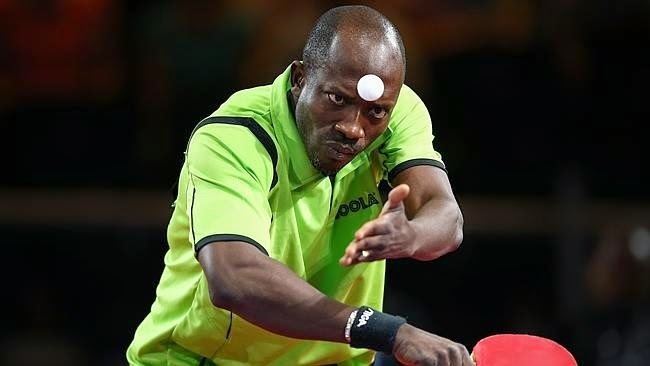
Segun Moses Toriola

‘Nigerian table tennis player, Segun Moses Toriola’ made an appearance in the 2008 Beijing Olympic Games’ the table tennis player looked for ‘revenge for a lifetime of being overlooked’ (Palmer, n.d.).

‘Table tennis was ranked 26/28 of most popular Olmpic sports’ (IOC,2005).

‘He has been the number one player in this sport in Nigeria for all but a year of his career and he has enjoyed success at the Commonwealth Games in both 2002 and 2006’ (Willis,2010).

‘In real life, due to his relative anonymity, he has never been a major focal point in the media’ (Palmer, n.d.).

Toriola had a goal that he wanted to prove everyone wrong that he was the best at Table Tennis. He had a passion for the sport and he wanted to pursue his passion as a career. He had the opportunity to become president of his home country but he declined this offer, he didn’t want to as he wasn’t respected before his glory. He wasn’t media influenced and he kept his morals. Personally I have never heard of the athlete, and it makes me think that the media doesn’t want to showcase this as he went against the ‘tide’ and did the opposite of what the media want from sport in the 21st Century – to make money and not focus on the athletes goals and ambitions.

Fans can ‘communicate directly with athletes, and in some cases, engage them in conversation, which has the possibility of turning confrontational. Interestingly, social media have made athletes more accessible virtually’ (Sanderson, 2011).

This makes it ever so easy for athletes to be distracted from their sport and drawn over to the social media. I believe we need more stories like Toriola that have an ambition to play sports that are not social media driven. Athletes need to stay away from the social media side in order to maintain a successful career, because if they are not careful they can fall off their success very quickly.

The importance of participation at a young age

Have you ever heard of the saying practice makes perfect. Well it actually doesn’t make sense if you think about it. You practice something wrong for ‘10,000 hours’ (Ericsson, 1993) then you are going to master the art of doing it wrong. Practicing a skill that is correct for half the time will lead you to ‘perfection’. So practice makes permanent.

In a recent football match I was coaching – I was so obsessed with even game time that I was finding myself not looking at the players performance. It came to my attention that even though game time at a young age is vitally important – it’s just as important to do the correct technique in a match – to understand what they are doing and why they are doing it. I believe it would be beneficial for the players if I focused less on getting them on the pitch and randomly running around and instead mastering the art of player analysis.

Image result for children football team
An example of a football match similar to my under 7’s team

I believe looking at the players strengths and weaknesses is something all coaches should be doing constantly. For those players on the pitch, and boosting the morale of the players on the bench and engaging with them ( which I had been doing). I believe this should be done instead of worrying about getting them on in 3 minutes and 40 seconds to have even game time. This is something I think is more important, and when coaches have to think about even game time – they have less time to think about analysing.

Although participation is a very important part of sport, ‘Having fun seems to be the main reason for children’s participation in sport’ (Orlick,1986). As I have said at the start of this blog practice makes permanent. If I put the players out for even game time for the sake of getting game time – they may be learning incorrect skills and affect their cognitive learning. They may find themselves losing interest in the sport, which will make it less fun and consequently decrease participation.

Image result for childrens football team manager
A manager engaging in their players – giving them feedback

Therefore, from experience from my football match, and with some help of research. I think it is vitally important to focus on getting to know your players. Really get to know what their strengths and weaknesses are and when they go onto the pitch to play football – they have an end goal, not just going onto the pitch like a headless chicken to get some even game time.

Diamond 9

Lots of coaches have characteristics to make them who they are. Lots of the coaches share the same characteristics that some would determine a requirement for the coach to have. In this blog I will be discussing, along with my peers on my course the best 9 characteristics a sports coach can have.

The ‘diamond 9’ consists of different characteristics that a coach might display. I decided to group 2 together as there was only 8 of us in a group and I made up the missing characteristic.

Our final agreed outcome of how the diamond 9 should look

Inclusion

Flow, Engagement

Simplicity, accommodation, innovation

Empathy, relevancy

Rewards

My characteristic that I chose to explore was – Flow

‘Jackson and Roberts’ said that participants that experience flow are more likely to enjoy there sport.

If flow occurs – there is a greater chance of the holistic development (social, tactical, physical and psychological) as the session will be maximised effectively for time management. The Definition – an optimal psychological state that typically occurs when there is a balance between the perceived challenge of the situation and a persons skill or capabilities for action. (Cambridge Dictionary)

How it can be done ?

  • A coach might want to use whiteboards
  • Setting up early
  • Having an assistant to help organise
  • Have fun engaging games that have a clear progression
  • High % of ball time

The other characteristic I chose to explore was RELEVANCY

Relevancy is – the degree to which something is related or useful to what is happening or being talked about (Cambridge dictionary)

It is important that the coach is talking about their sport- and linked to the session they are taking.

Linking relevancy to flow – if the coach isn’t talking about the correct information- it will disengage the players as that is not what they want to hear and furthermore will then disrupt their learning and ultimately the FLOW of the session.

And example – a football coach talking about contact tackling in football – this is irrelevant as this is illegal in football

  • dangerous to the players
  • teaching them wrong skill
  • affects overall flow as players become disengaged

Wesson and Boniwell, 2007.

Villalon and Martin, 2020.

See reference list for research of other characteristics.

To conclude, I believe my characteristics are one of the most important traits a coach can have. Both go hand in hand and make the session a high quality session – in any sport. All other factors contribute to make a great coach. However people will have different views on what they think is the most important. As long as there is evidence to support it, as to there reason why, there’s an argument that all of them should be most important.

Design a site like this with WordPress.com
Get started